He was born in Maella (Zaragoza) on June 11, 1921. His parents, when he was two years old, moved to Barcelona and he died in this city on April 14, 1998.
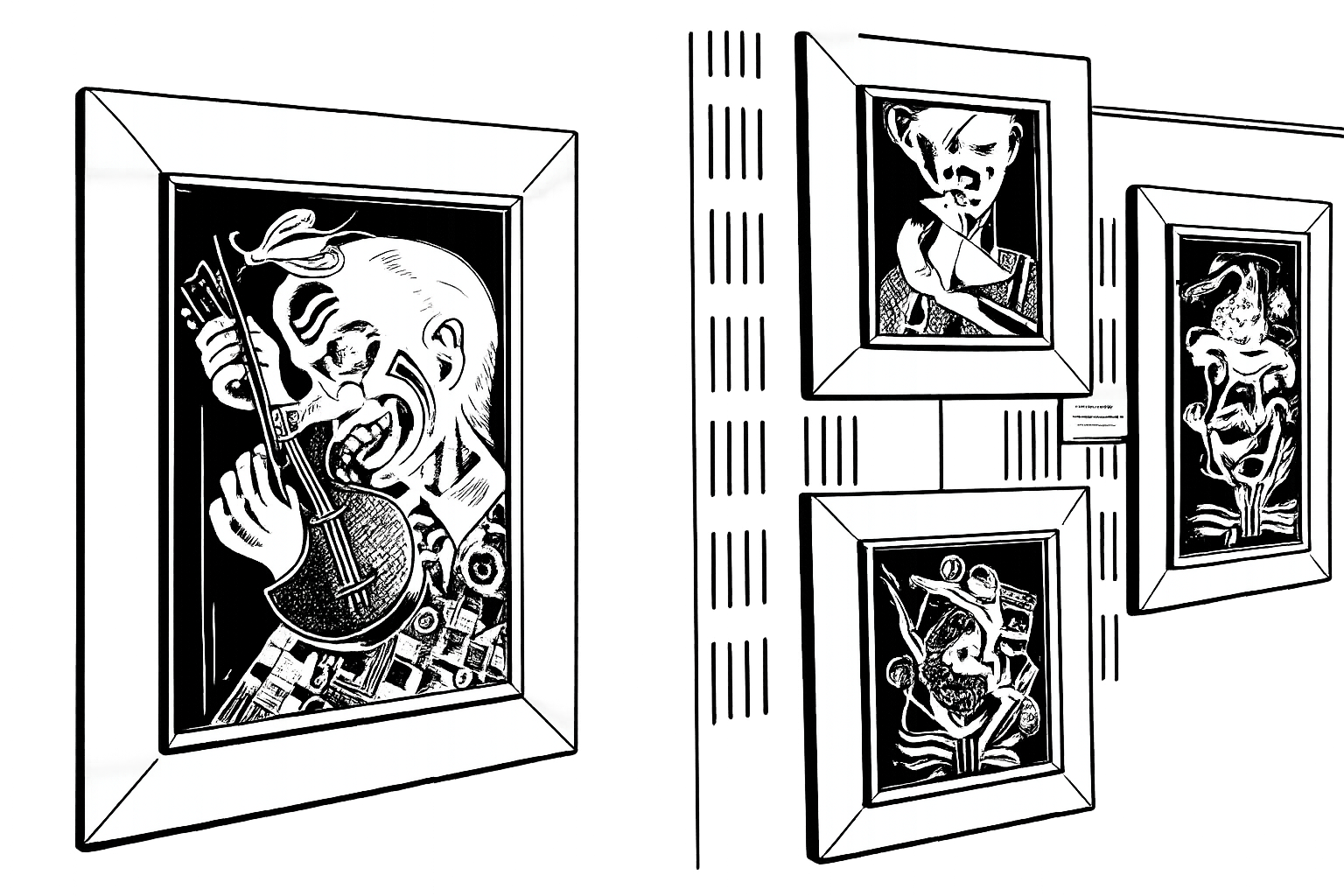
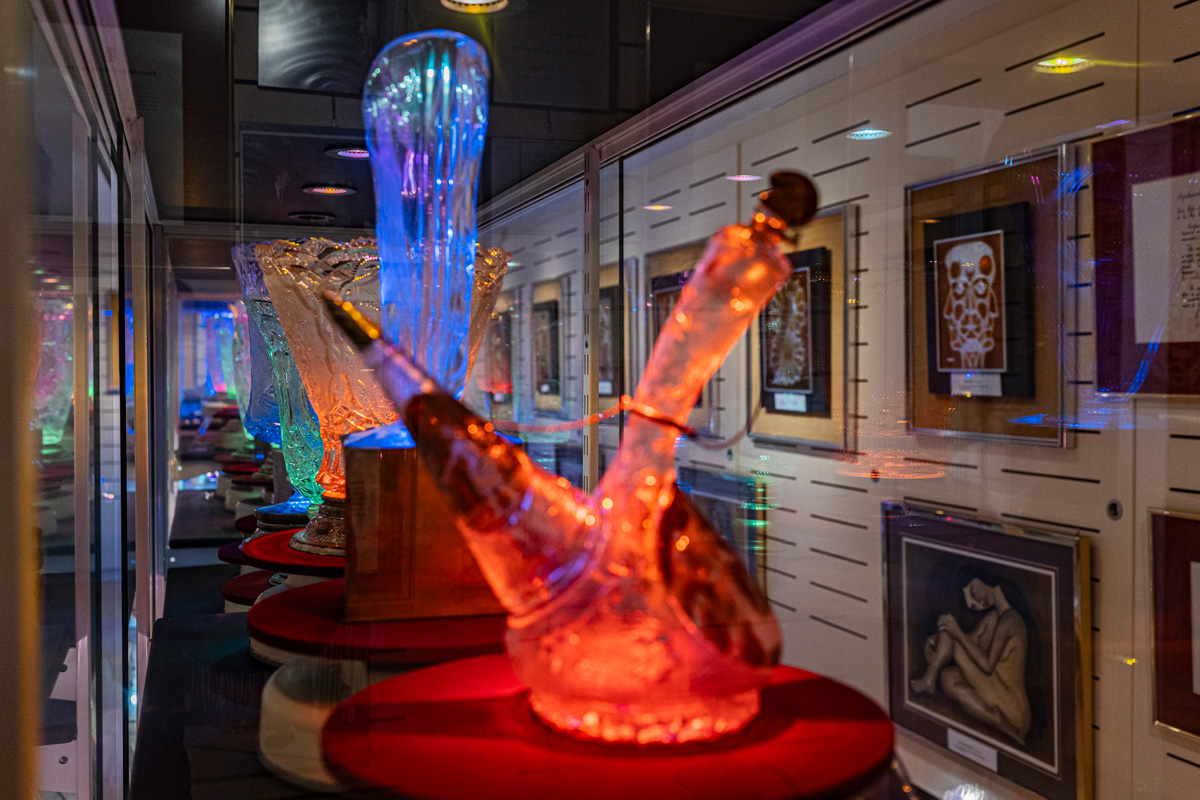
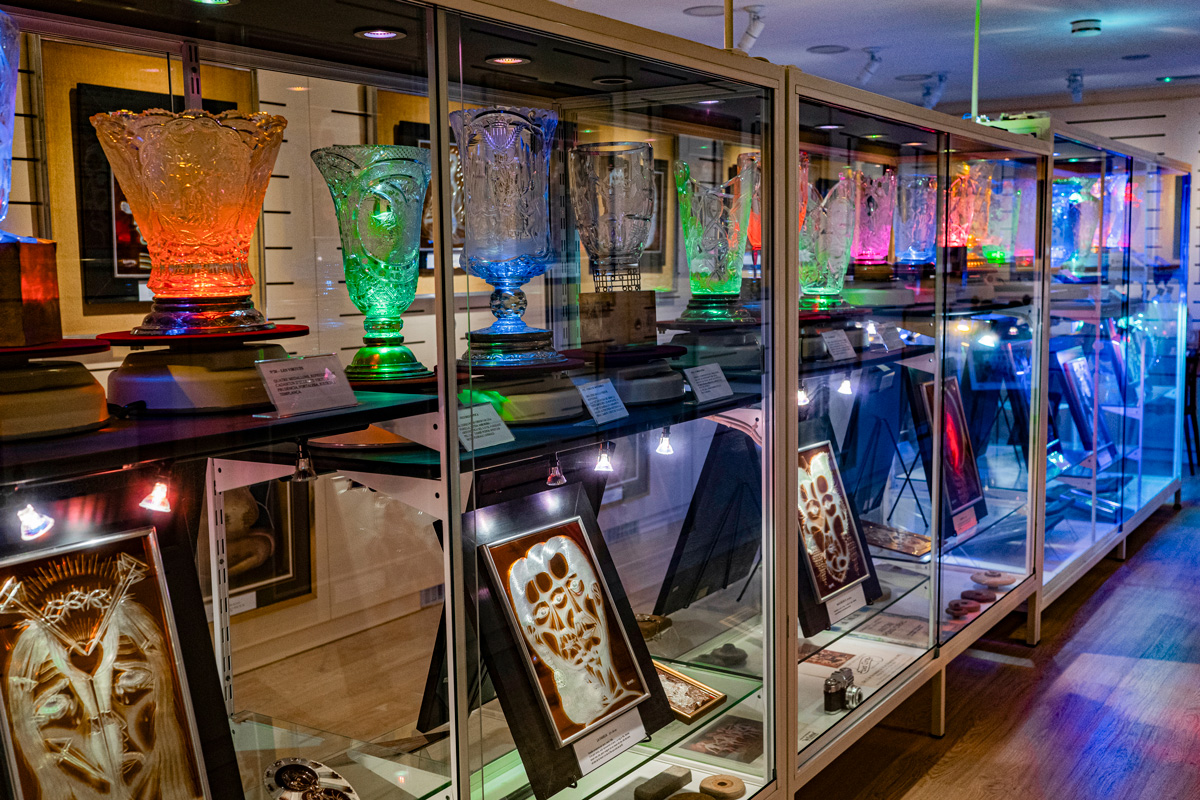
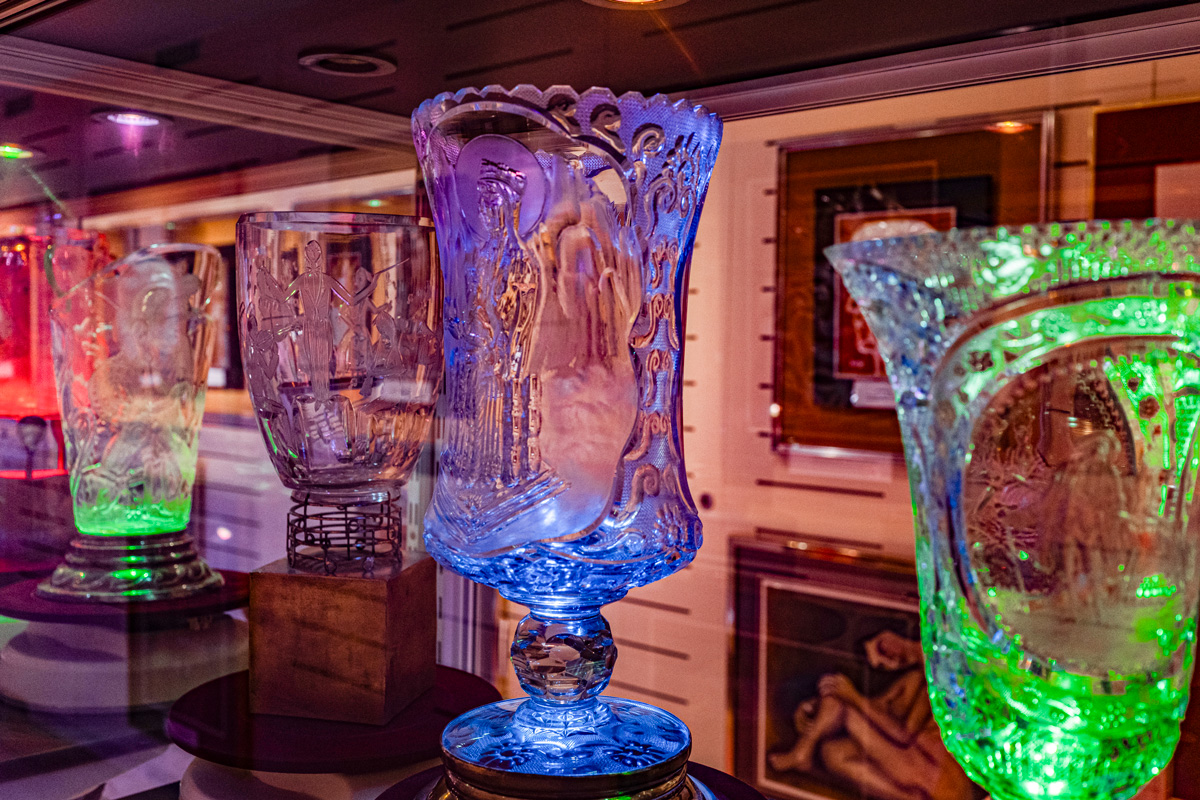
He is the author of surprising and unprecedented art. His paintings (flat bases) and his vases (hollow bases) form an art where the creation of drawing and carving maintain a composition that is very difficult to achieve, offering perspectives worthy of admiration, forming an unrepeatable and universal art.
Pons Cirac has the magical power of the alchemists of the Middle Ages that allows him to transmute glass into jewel. Pons Cirac’s work needs the lyrical exaltation of a poet because it is pure poetry, made of reflections, light mutations, dazzling lines, encrypted messages of symbolism and allegories that only he was able to explain through the perpetually metamorphosing forms, depending on the angle of vision and focus.
Mystery, of its worked and poeticized expectant crystals, where dreams are embodied, the clear surface becomes three-dimensional and the shapes adopt the most fascinating fantasy contours.
Presentation of his first works at the 1st International Exhibition in Madrid, where he was awarded a medal and diploma of honor.
Selected in the Selectiva in Milan, where he is the only Spanish craftsman in the art of cut glass.
The vase with the image of Pope Pius XII was acquired by the parish of Sant Medir, and personally delivered by the artist to the pontiff.
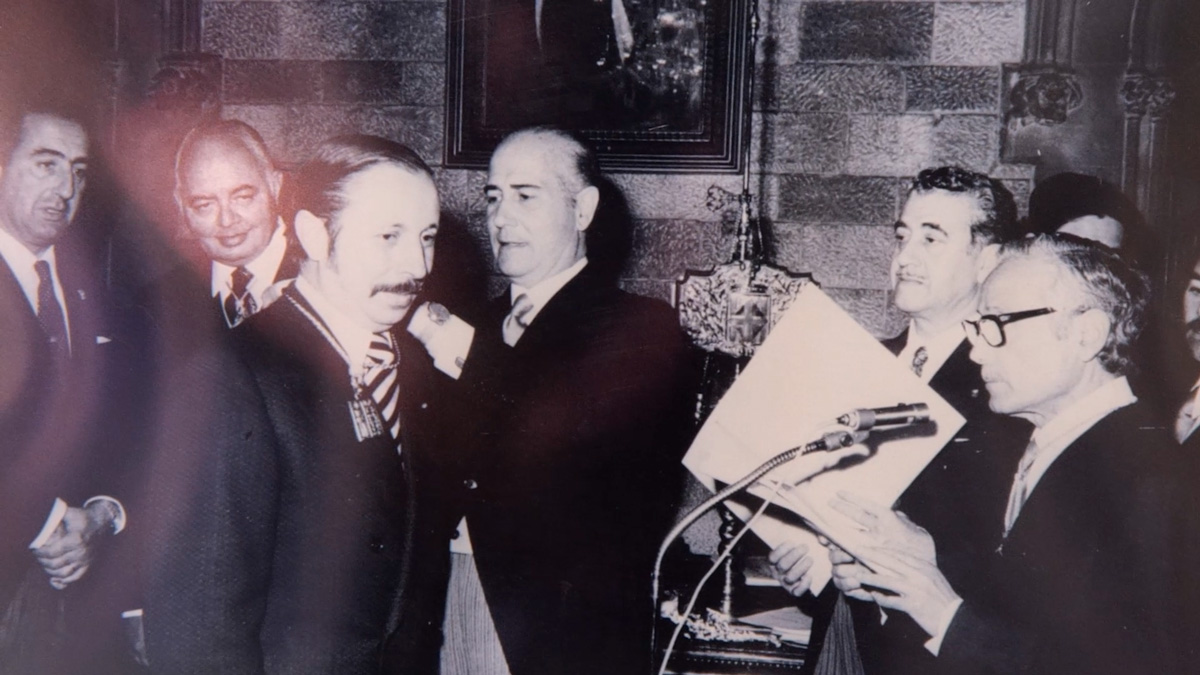
France is awarded the Official French National Merit Cross, awarded in an official ceremony at the French Institute in Barcelona.
He is awarded the Official French National Cross of Merit in France, awarded in an official ceremony at the French Institute in Barcelona.
In New York, at the D’Arcy Galleries art gallery, he presents his fourth exhibition.
His latest creations are exhibited at the “CITE” Information and Tourism Art Hall in Valencia, where he is awarded the city’s Medal of Artistic Merit.
He is requested to exhibit his work in several European cities in countries such as France, Italy and Belgium.
Exhibition at the IFAC art hall in Barcelona, where the documentary Les mans de Pons Cirac is screened. Among the personalities attending is Prince Juan Carlos de Borbón. Given the great success, the Barcelona Delegation of Culture presents him with a commemorative plaque for his artistic work.
He is awarded the silver medal with an extraordinary character through the Sant Jordi Award.
He personally delivers to Prince Juan Carlos de Borbón a vase with the portraits of SSMM.
The “Club de Vanguardia” of Barcelona pays him a tribute, during which he is awarded the Catalan Illustrious Artist medal.
Exhibition at the Palau Meca in Barcelona in homage to Catalonia. He is awarded the Cross of Belgian-Hispanic Merit.
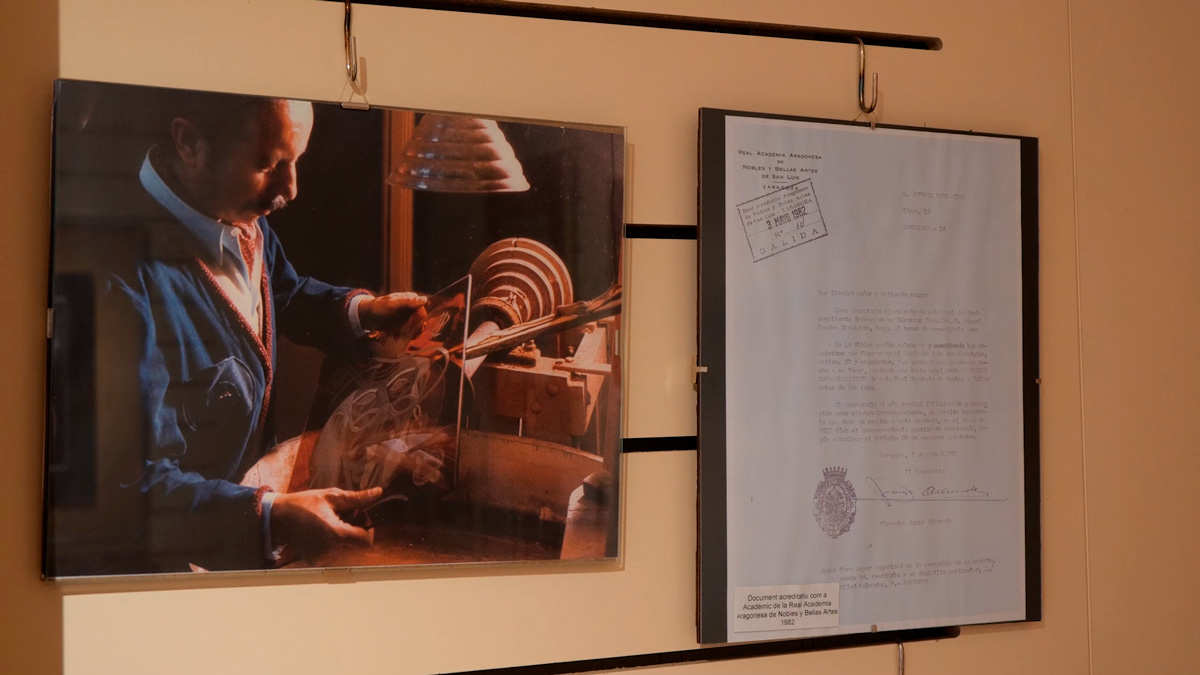
The Royal Academy of Sant Lluís de Zaragoza appoints him academician of the same city.
On the occasion of the 125th anniversary of the Bank of Bilbao, they gave him their large room to exhibit his work.
The Generalitat of Catalonia distinguishes him with the prestigious Creu de Sant Jordi.
He exhibits one of his works at the Barcelona International Fine Arts Exhibition, where he is distinguished with the Diploma of Honor.
On April 14, he died in Barcelona, leaving a unique body of work in the world.
The crystal is composed of potassium, soda, silicon lime, zinc oxide and carbon. To make it more transparent or neutral selenium, magnesium and cobalt can be added, as it gives it a bright blue hue, the glass is obtained by changing the lime for oxide and the soda for potassium.
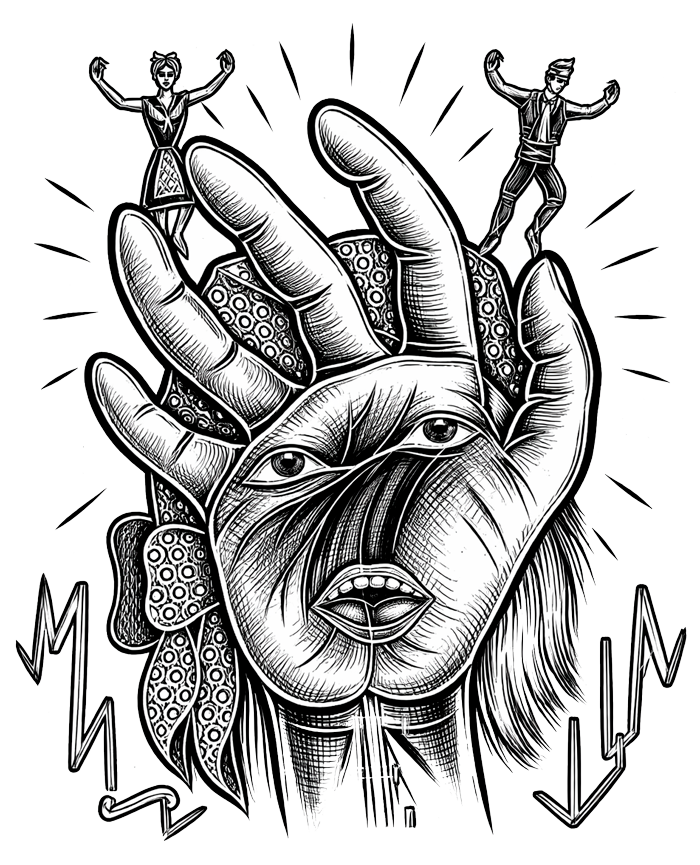
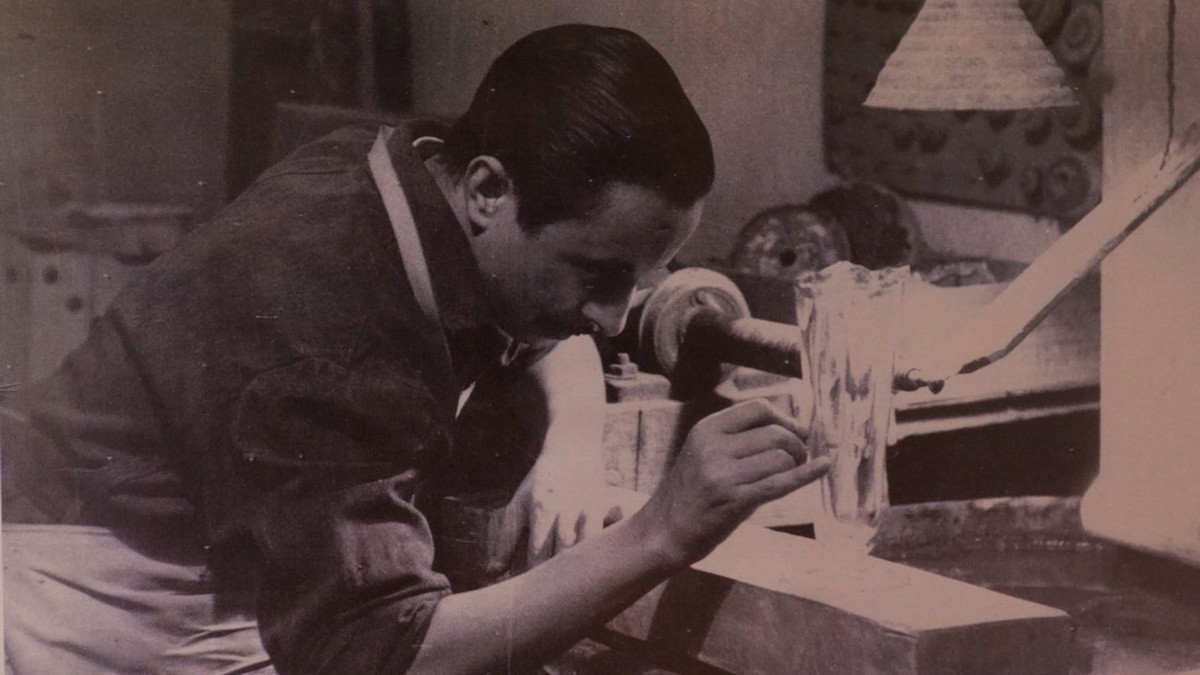
The technique used by master Pons Cirac is completely different because it is based on cutting, hollowing out the glass on both a flat surface and a hollow surface, and this technique defines him as a bas-relief sculptor.
The execution of these works is done with an electrically driven lathe, composed of an axis and different thread changes, and the tools used are the following:

Carborundum wheels: they are for scrapping, to make the first cut in the glass.

Then, the smooth surfaces are made with the corundum grinding wheel.
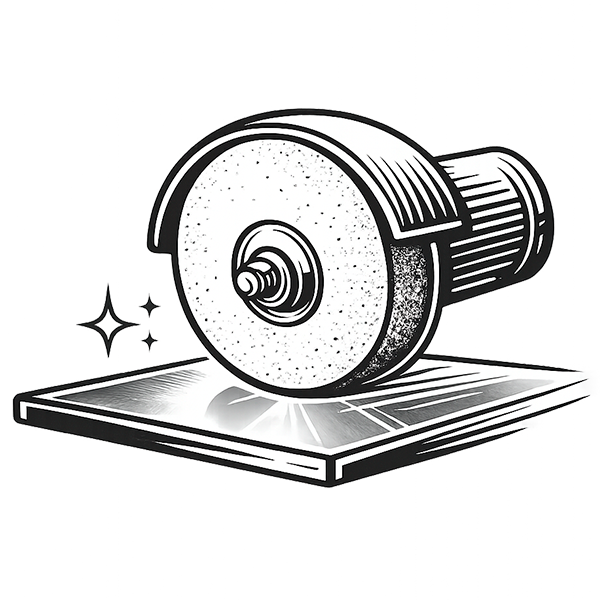
Finally, special cork wheels are used to execute the shiny surfaces and shading.
These last wheels must be wetted beforehand with pumice mud.
All this work must be done in powder. The drawing that is to be achieved must be sketched on the stone with a paste pencil and the first casting must be started; the rest is done “by eye”, with the difficulty of carrying out the work observing from the opposite side of the piece. The smallest error cannot be rectified and a slight mistake means the loss of several months of intense work.