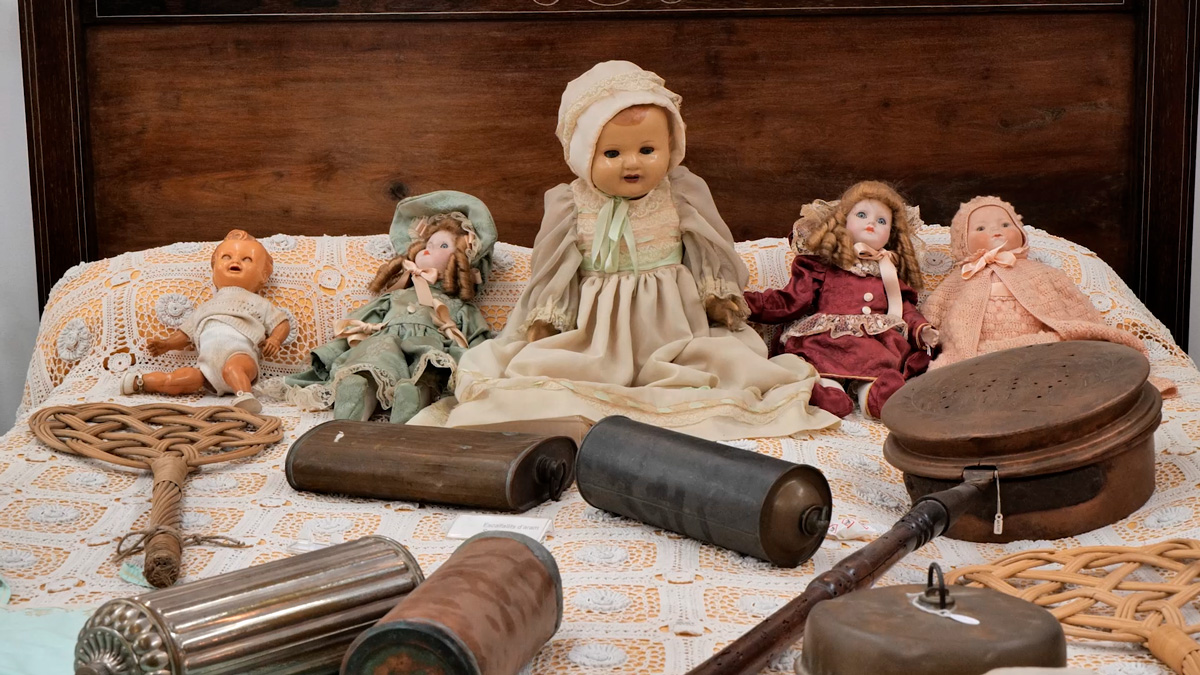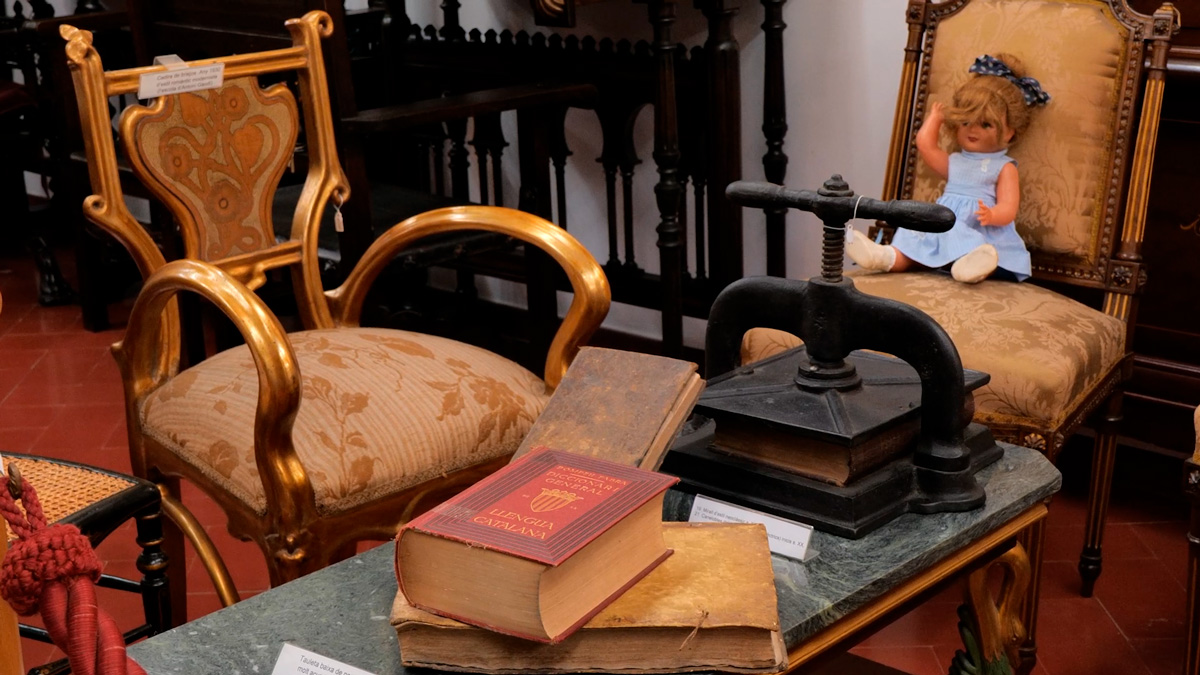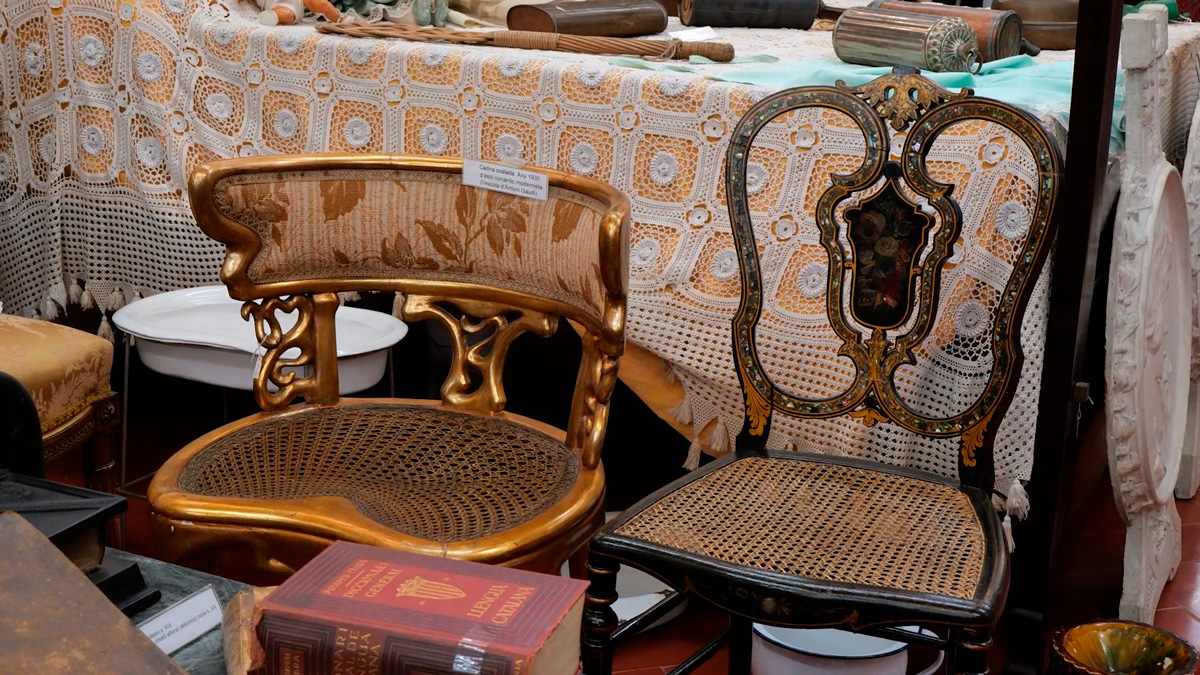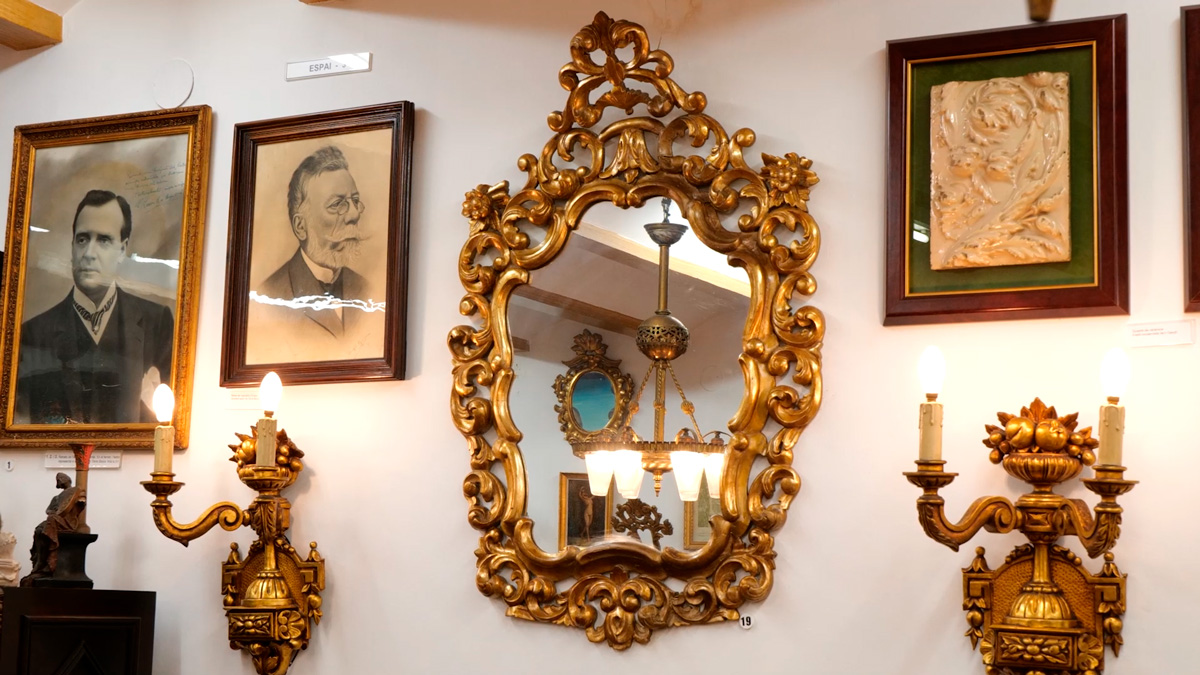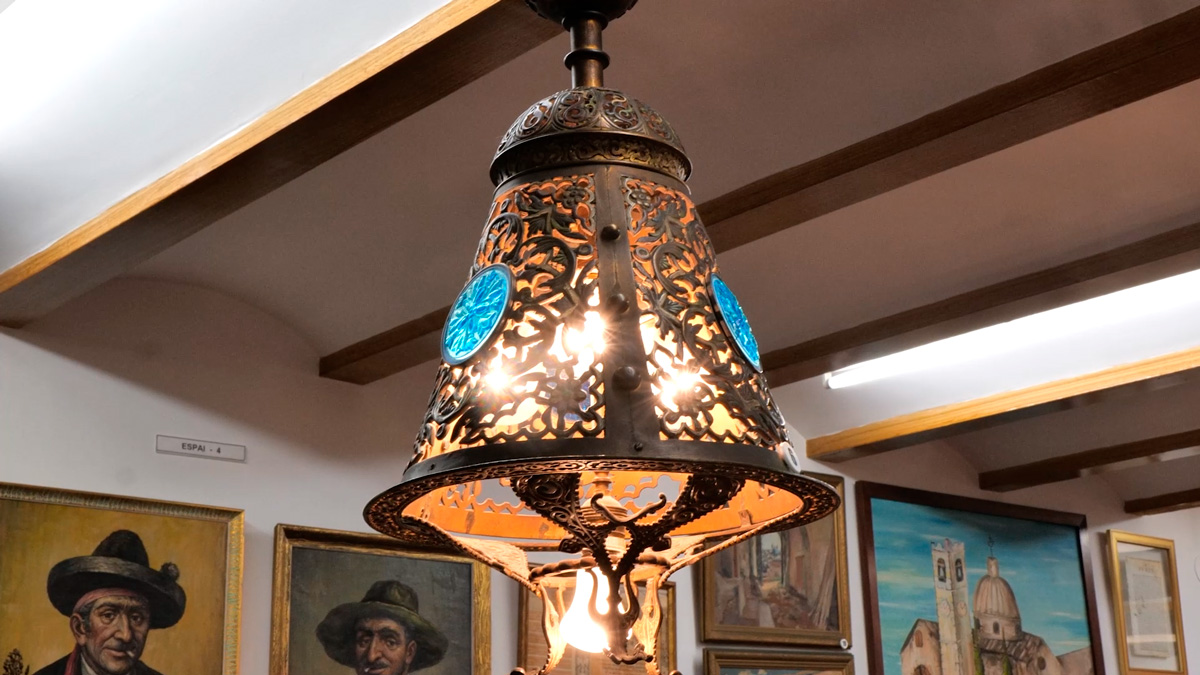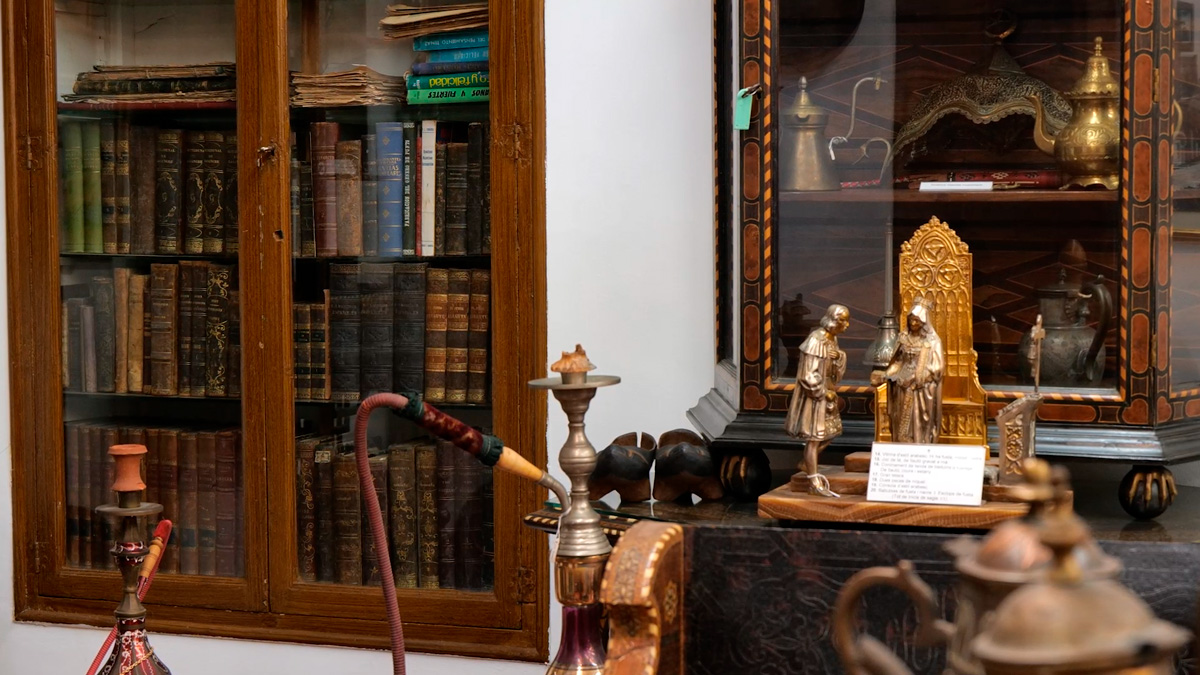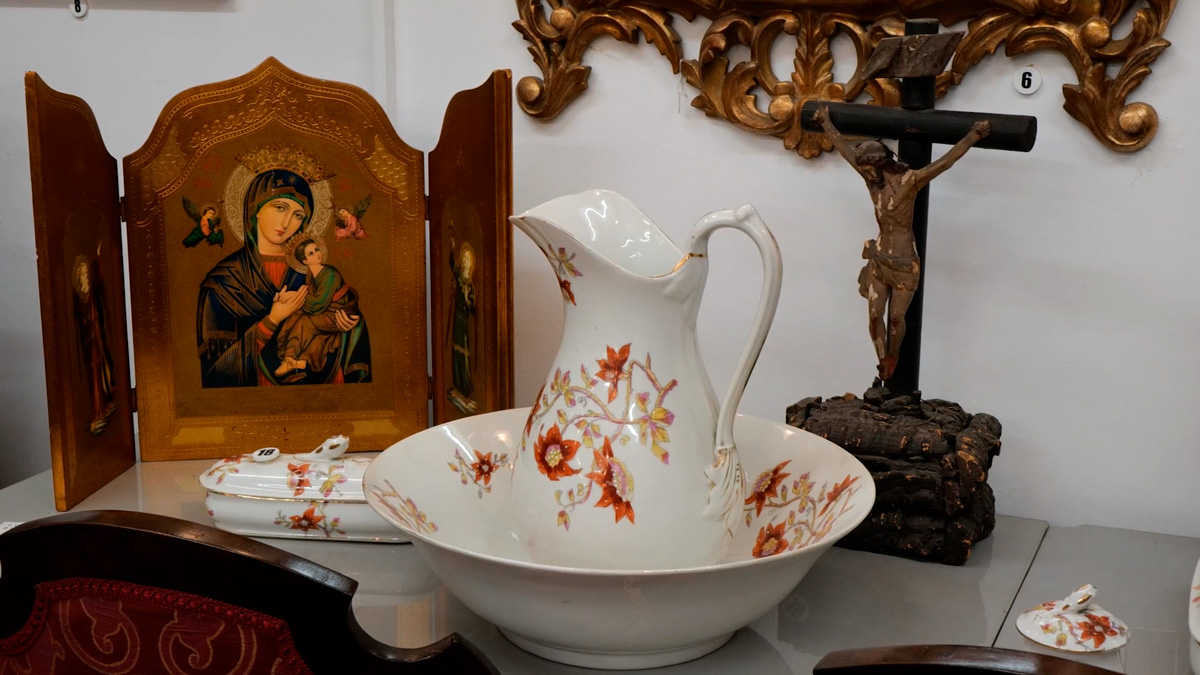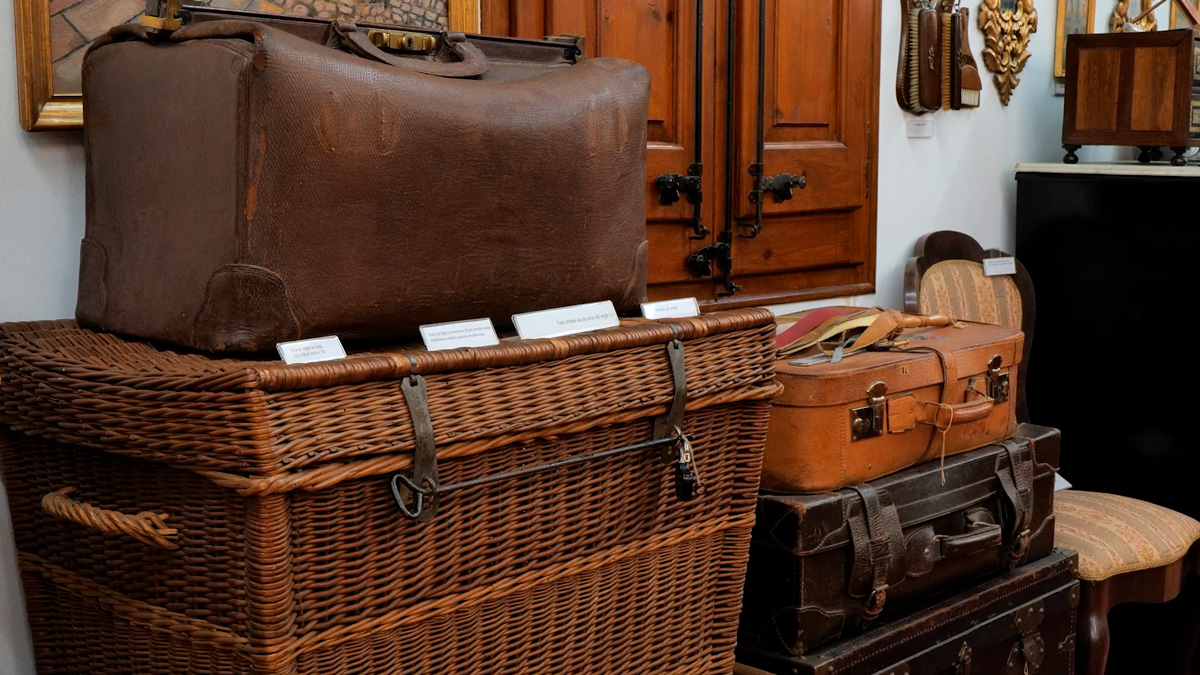
In this room we find a great variety of furniture that decorated the noble houses of the villages. We are faced with a diverse but very detailed collection that represents the beginnings of Catalan furniture. An example is the bride’s box, a piece of furniture that had multiple functions, but the main one consisted of storing the trousseau of the young brides, so that they could have everything they needed in their new home. In the houses there were as many bride’s boxes as there were pubilles. There are also walnut wood archimeses and archibanques with ornamental work that is authentic filigree.
One of the most complete and varied collections is that of chairs. There are chairs from various styles and periods: Elizabethan and Alfonsine styles, Friars chairs from the Fernandina period, chairs from the school of Antoni Gaudí, Renaissance, neoclassical and Arabic styles.
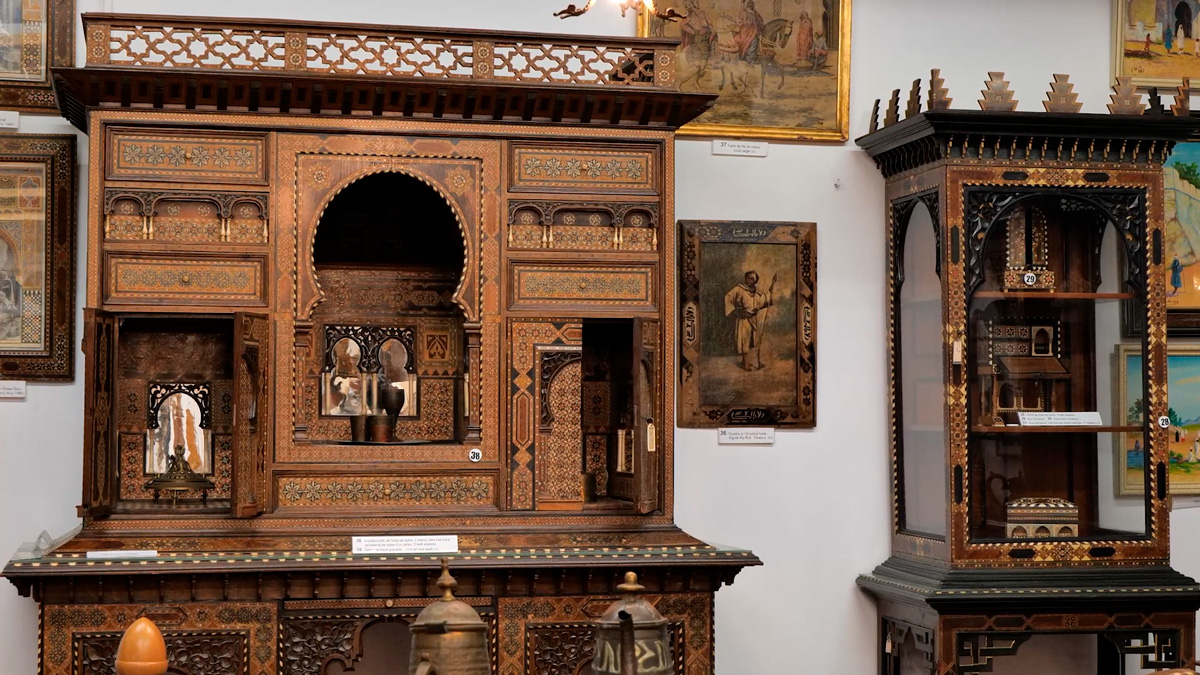
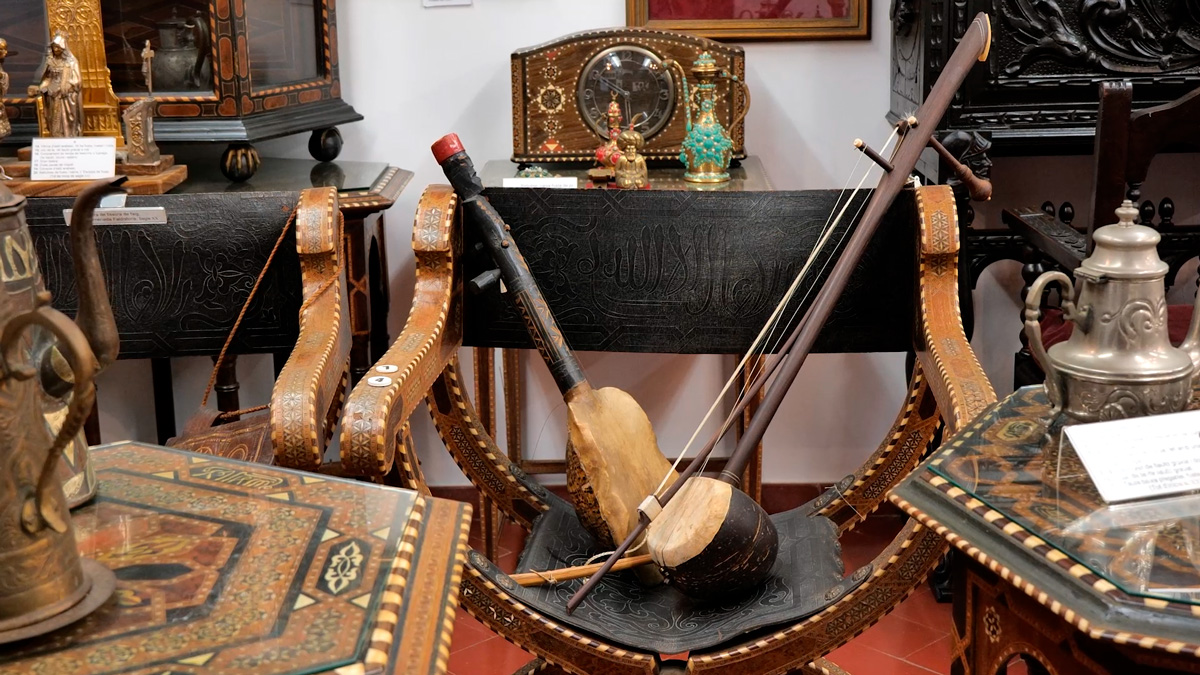
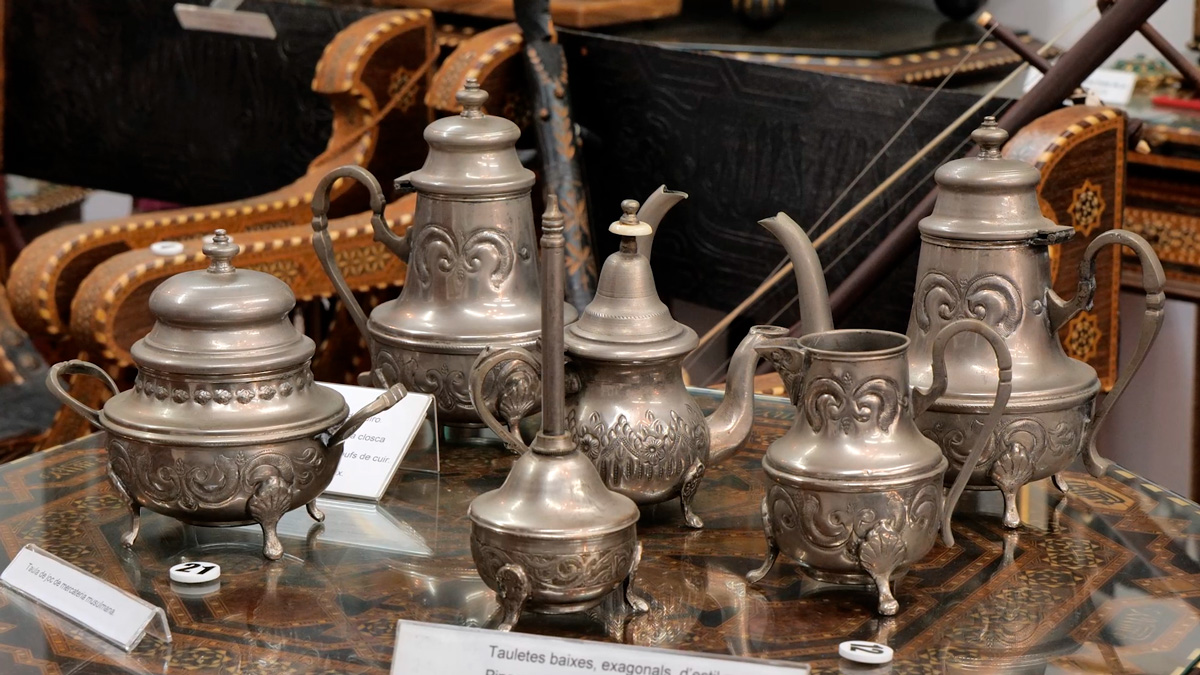
As we move through the room we reach the Moroccan furniture section. At the back of the room stands a spectacular chest-sideboard, where the detailed craftsmanship can be appreciated. This area is completed by tables, chairs, poufs and various objects from Muslim culture. The room also houses other objects that represented a historical moment in people’s memory, for example: a painting by Borrell that depicts a speech by Cambó or documents signed by kings: Philip IV, Philip V, Ferdinand VII, Isabel II and by the reigning queen Maria Cristina. The world of Catalan culture is also present with a portrait of Enric Borràs, who played the character of Manelic in “Terra Baixa”, directed by Àngel Guimerà.